
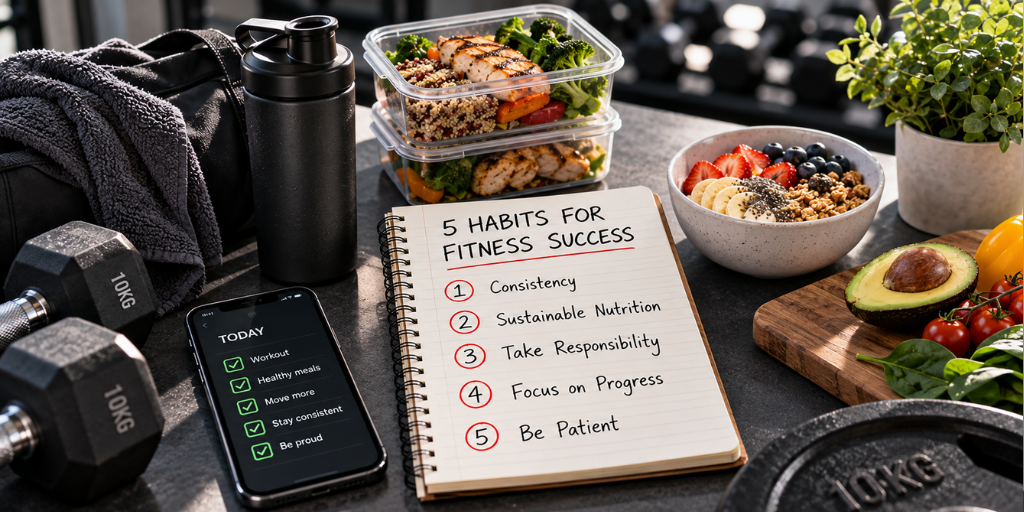
When people think about successful fitness transformations, they often focus on the end result.
They see the weight lost, the muscle gained or the physical changes someone has achieved.
What they don’t always see are the everyday decisions that helped make those results possible.
Lasting progress rarely comes from one perfect workout or a few weeks of eating well. More often, it develops through small actions repeated consistently over time.
At Absolute Body Solutions, our coaching approach focuses on personalised training, nutrition education and ongoing support. While every client has different goals, there are several useful habits that can help people make progress and maintain healthier routines.
Here are five habits worth developing if you want to get more from your fitness journey.
1. They Prioritise Consistency Over Perfection
One of the most valuable habits you can develop is learning to show up consistently, even when conditions aren’t perfect.
It’s easy to follow a training programme when life is quiet, you feel motivated, and your schedule is predictable. The real challenge comes when life becomes busy.
Successful progress doesn’t require every week to go exactly to plan. It requires a routine that can adapt when circumstances change.
For example, you might usually train three times a week, but an unexpectedly busy period means you can only manage two sessions. Rather than abandoning your routine, you adjust your schedule and continue.
The same principle applies to nutrition. One meal that doesn’t go to plan doesn’t need to turn into several days of abandoning your goals.
How to develop this habit
- Schedule your workouts around your actual commitments.
- Set a realistic minimum level of activity for busy weeks.
- Return to your usual routine after an interruption.
- Focus on the behaviours you can control rather than expecting perfect results every day.
At ABS, programmes are tailored around individual lifestyles and can accommodate different training frequencies. The aim is to create a routine that suits the person rather than forcing everyone to follow the same schedule.
Remember: A manageable routine you follow regularly can be more useful than an ambitious plan you struggle to maintain.
2. They Make Nutrition Practical and Sustainable
Nutrition plays an important role in weight management, muscle development and general health. But successful eating habits aren’t necessarily the most complicated ones.
People often assume that getting results requires expensive foods, elaborate meal preparation or a strict diet that eliminates everything they enjoy.
In practice, a sustainable approach starts with understanding what your body needs and finding ways to meet those needs consistently.
That might mean preparing a few meals in advance, keeping convenient options available for busy days or learning how to build balanced meals from familiar ingredients.
It also means understanding that your nutritional needs and preferences are individual.
A plan should reflect your goals, lifestyle, food preferences and any relevant dietary requirements. If it doesn’t, it may be difficult to maintain.
How to develop this habit
- Plan a few meals ahead rather than trying to organise every detail.
- Include a variety of vegetables, fruit, protein sources and other nutrient-rich foods.
- Pay attention to portions and overall energy intake if weight loss is your goal.
- Make room for flexibility and social occasions.
- Learn simple nutrition principles that help you make independent decisions.
ABS incorporates personalised nutrition plans and food education into its training programmes, helping clients understand how their eating habits can support their goals.
Remember: Your nutrition plan should support your life, not make everyday life unnecessarily difficult.
3. They Take Responsibility for Their Progress
Having a goal is a great starting point, but goals alone don’t guarantee progress.
You might want to lose weight, gain muscle or improve your fitness. The next step is to identify the actions that will move you towards that outcome.
This means looking honestly at your current habits, recognising where improvements are possible and taking responsibility for the decisions you make.
It doesn’t mean blaming yourself when things go wrong. It means understanding that you have opportunities to make changes and learn from experience.
For example, if you regularly miss evening workouts because you’re tired after work, the answer might be to train in the morning or choose a different time. If you struggle with meals during busy working days, preparing a few convenient options could make a difference.
Instead of repeatedly asking why you lack motivation, ask what would make the desired behaviour easier.
How to develop this habit
- Set clear, realistic goals.
- Identify the habits that will help you achieve them.
- Review your week and recognise what went well.
- Identify obstacles without judging yourself.
- Make practical adjustments instead of repeatedly starting from scratch.
Accountability can also help. At ABS, regular communication with trainers gives clients opportunities to discuss their progress, ask questions and receive support between sessions.
Remember: Taking responsibility is about finding solutions, not expecting yourself to be perfect.
4. They Focus on Progress, Not Just Weight
The number on the scales can be a useful measure, particularly when weight loss is a primary goal. However, it doesn’t tell you everything about your health, fitness or body composition.
You could be getting stronger, improving your cardiovascular fitness and becoming more confident in the gym while your weight changes only gradually.
Equally, changes in body weight can reflect normal fluctuations in fluid balance rather than changes in body fat.
If you judge your entire journey by one number, you risk overlooking meaningful improvements.
How to develop this habit
Consider several indicators of progress, such as:
- Strength: Are you becoming more capable in your workouts?
- Fitness: Are everyday activities becoming easier?
- Consistency: Are you following your training routine more regularly?
- Body composition: Are measurements changing in line with your goals?
- Wellbeing: Are you feeling more confident, energetic or comfortable with your routine?
Choose measures that are relevant to your goals and appropriate for you. You don’t need to track everything.
ABS uses body composition measurements to help inform programme adjustments, while recognising that clients come to personal training for a range of outcomes beyond weight loss.
Remember: Progress should be measured against your own goals, not somebody else’s transformation.
5. They Accept That Long-Term Results Take Time
It’s understandable to want quick results, particularly when you’re putting significant effort into changing your lifestyle.
However, developing new habits, improving fitness and managing weight sustainably are processes that take time.
People who focus exclusively on rapid changes can become discouraged when progress slows. They might respond by cutting calories further, adding excessive exercise or abandoning their plan for something new.
A more useful approach is to recognise that your needs will change as you progress.
Your training may need to become more challenging. Your nutrition may need reviewing. Your schedule might change, requiring you to adapt your routine.
This is why flexibility and ongoing learning are so important.
How to develop this habit
- Set short-term goals that contribute to a bigger objective.
- Review progress regularly rather than judging individual days.
- Allow time for recovery and adaptation.
- Expect occasional setbacks and plan how you’ll respond.
- Think about how you’ll maintain your results, not just how you’ll achieve them.
ABS offers programmes of different lengths, including six-week, 12-week and 16-week options, with longer programmes allowing training and nutrition to develop over time.
The right timeframe depends on your starting point, goals and circumstances. What matters is building a process that can continue to serve you.
Remember: You aren’t just working towards a result. You’re developing the habits that can help you sustain it.
How to Put These Five Habits Into Practice
You don’t need to change everything this week. In fact, starting with too many new behaviours can make it harder to stay consistent.
Instead, choose one or two habits that would make the biggest difference to your current routine.
For example, if you’re struggling to exercise regularly, start by scheduling two realistic workouts each week. If your nutrition feels disorganised, plan a few balanced meals in advance.
Once those habits become more established, introduce another change.
The aim is to create a routine that becomes easier to maintain over time.
Final Thoughts
Successful fitness journeys don’t all look the same. Some people want to lose weight, others want to build muscle, and many simply want to feel healthier, stronger and more confident.
But whatever your goal, consistency, sustainable nutrition, accountability, meaningful progress tracking and patience can provide a useful foundation.
At Absolute Body Solutions, we help clients put these principles into practice through personalised training, nutrition guidance and ongoing support.
Ready to build habits that support your goals? Book a free consultation with ABS to discuss where you’re starting, what you want to achieve and how a personalised programme could help.


